
The A. R. Rahman Controversy
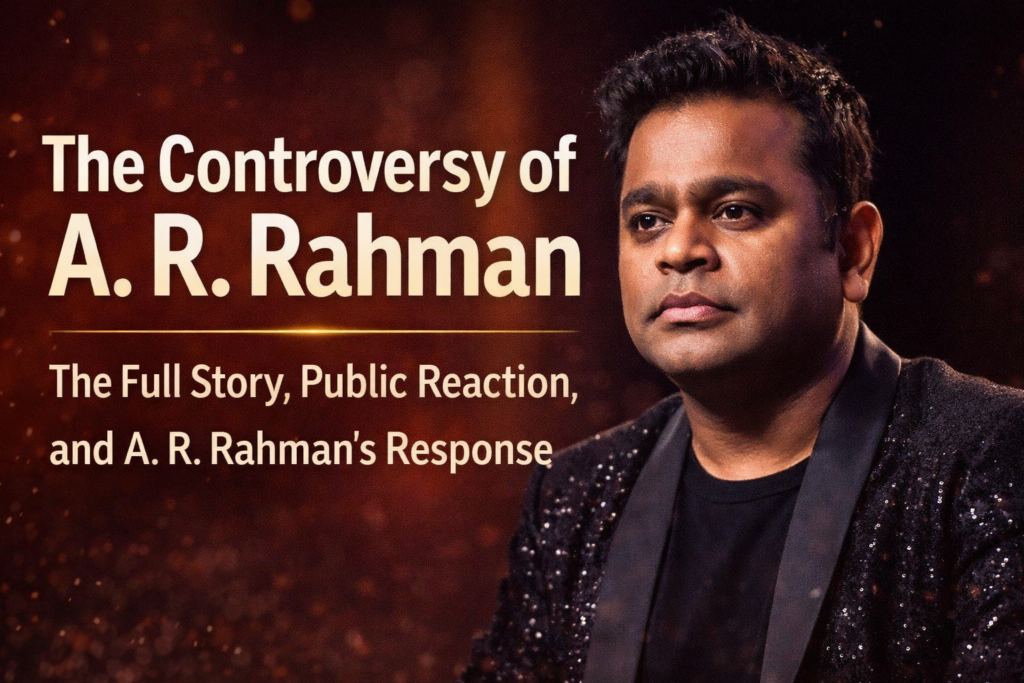
In mid-January 2026, legendary composer A. R. Rahman became the centre of a major media and social media controversy following remarks he made in a public interview with BBC Asian Network about his experiences in the Indian film industry.
In the interview, Rahman stated that his work in the Hindi film industry (Bollywood) has slowed down in recent years, and he attributed this — in part — to shifts in power dynamics within the industry. He suggested that people who are not creative now hold influential positions, which has impacted opportunities for composers in general. Rahman went on to say that this might also be due to “a communal thing” — a phrase that many interpreted as suggesting religious bias against him within parts of the industry.
He also made a comment about the film Chhaava, calling it “divisive”, which further fuelled debate around his broader views on cultural and communal narratives in entertainment.
These remarks were widely shared by media outlets and on social platforms, and they triggered a rapid backlash. Critics argued that Rahman’s comments implied communal discrimination within the industry and were divisive. Supporters argued that he was merely speaking from his lived experience without intending to offend anyone.
Public and Industry Reactions
The response from various quarters was swift and polarising:
Bollywood Celebrities and Critics: Some prominent personalities openly disagreed with Rahman’s suggestion of communal bias. Columnist Shobhaa De labelled such a comment “dangerous” and said there was no communal bias in Bollywood, emphasizing that talent, not religion, determines opportunities. Lyricist Javed Akhtar also stated he had never personally seen such bias in the film industry.
Political Commentary: The debate extended beyond entertainment circles into politics, with various commentators and politicians weighing in on whether Rahman’s wording reflected real industry problems or was a misinterpretation of broader industry dynamics.
Social Media Backlash: On platforms like X (formerly Twitter), some users criticised Rahman for implying communal discrimination, while others defended his right to express his perspective.
Support from Peers: Not everyone was critical — award-winning lyricist Varun Grover, for example, defended Rahman, saying that his comments were made “in the politest, mildest manner” and that the backlash was excessive.
A. R. Rahman’s Clarification and Response
After several days of intense online and media discussion, A. R. Rahman issued a video message on social media to clarify his remarks and address the backlash directly.
In his video statement — shared on Instagram — Rahman emphasised several key points:
1. He did not intend to hurt anyone.
He said that his comments may have been misunderstood and that he did not wish to cause pain to anyone’s sentiments.
2. India is central to his identity.
Rahman described India as his inspiration, teacher, and home, reinforcing that his creative work has always been rooted in celebrating the country’s diverse culture.
3. Music as a unifying force.
He stated that music has been his way of connecting with people and promoting unity. He listed recent works, collaborations with young musicians, and initiatives showcasing multicultural talent to underline his commitment to India’s creative landscape.
4. Gratitude and continued commitment.
Rahman reaffirmed his gratitude to the nation and reiterated his commitment to creating music that “honours the past, celebrates the present and inspires the future.” He concluded with patriotic sentiments and reaffirmed his love for his country.
Why This Matter Resonated Widely
Several factors contributed to the intensity of the controversy:
Rahman’s stature: As an Oscar-winning composer with decades of influence and acclaim, any remarks he makes attract attention.
Sensitive social context: Discussions of communal bias are politically and socially charged in India, making public figures cautious about such topics.
Industry dynamics: Cinema professionals often face scrutiny over inclusivity, representation, and the role of creativity versus commercial influence — and Rahman’s comments touched on these complex issues.
The A. R. Rahman controversy illustrates how nuanced discussion about industry trends, creative power dynamics and social context can rapidly escalate into public debate when interpreted through the lens of communal discourse. What began as remarks about changing patterns in film work turned into a larger conversation about artistic freedom, public sensitivity, and the responsibilities of influential cultural figures.
Rahman’s clarification sought to address misunderstandings and reaffirm his longstanding love for India and its diverse creative community, while reactions across media, entertainment, and politics reflected the complexity of interpreting such statements in the current social climate.
I have been searching for a fun gaming hub that actually delivers on its promises and this place nailed it. The graphics are crisp, loads fast, and there is something for every type of player. It is become my go to for late night sessions. Visit the site zs555game
I have been trying out different betting platforms lately and I finally found my go to spot. The login process is super smooth and I never get stuck in queues. Customer service replied to my query within minutes and the payout speed is exactly what I hoped for. If you want a stress free experience I highly recommend giving this a try. ps88login
Love how this site focuses on horse racing and keeps everything transparent for us regular players. Never had an issue cashing out my winnings and the live tracking feature makes watching the races so much more exciting. A solid choice for anyone who enjoys a bit of racing action with honest odds. betfaircaballos
[4050]Juega Login Oficial | Mejores Slots y Depósitos con SPEI,Juega en la plataforma líder de México. Descarga la APK oficial, domina las reglas de la ruleta europea y disfruta de los mejores slots. ¡Regístrate hoy mismo! visit: juega