
Breathing Techniques for Singers
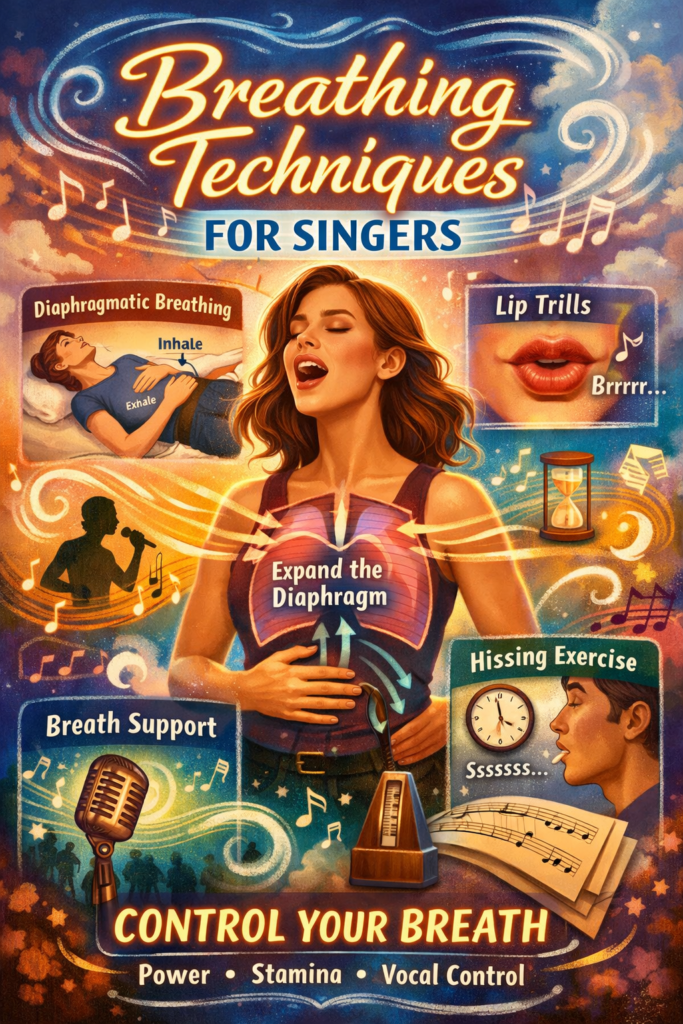
Breathing is not just a biological function for singers — it is the core mechanism behind tone quality, pitch stability, vocal endurance, and dynamic control. Professional vocalists treat breath as “fuel for the voice.” Without proper breath management, even a naturally good voice sounds weak, shaky, or strained. Below is a structured breakdown of essential breathing techniques and practices used in vocal training.
1. Diaphragmatic Breathing (Belly Breathing)
This is the primary breathing method for singers.
What It Is
Instead of lifting the chest and shoulders, the singer engages the diaphragm, a dome-shaped muscle below the lungs. When you inhale correctly:
The belly expands
Ribs widen
Chest remains relatively relaxed
Why It Matters
Increases lung capacity
Provides steady airflow
Reduces throat tension
Improves vocal power and sustain
Practice
Lie on your back.
Place one hand on chest, one on stomach.
Inhale through the nose for 4 seconds — stomach rises, chest stays still.
Exhale slowly on a “sss” sound for 8–12 seconds.
Repeat 10 times daily.
2. Breath Support (Appoggio Technique)
Used in classical and contemporary professional singing.
Concept
“Appoggio” (Italian: to lean) means balancing breath pressure between:
Diaphragm
Rib muscles
Abdominal muscles
The singer doesn’t push air out — they control the release.
Benefits
Stable pitch
Strong high notes
Smooth vocal tone
No vocal strain
Practice
Inhale deeply (belly + ribs expand).
Start a long note like “Ahhh”.
Keep ribs expanded while abs slowly engage inward.
Avoid sudden air bursts.
3. Sustained Airflow Control
Singing requires regulated air, not forceful air.
Exercise: Hissing Control
Inhale for 4 seconds.
Exhale on a steady “ssss” sound for 15–20 seconds.
Keep sound even (no shaking).
This trains airflow consistency, crucial for long phrases.
4. Silent Low Breath Technique
Quick and quiet breathing between lyrics is essential for live performance.
How
Breathe through the mouth silently
Expand lower ribs
Avoid shoulder movement
Why
Prevents audible gasps and maintains musical phrasing.
5. Panting Exercise (Diaphragm Activation)
Strengthens breath muscles.
Do quick, light pants like a dog: “ha-ha-ha”
Feel abdominal muscles moving
Keep throat relaxed
This builds breath agility for fast vocal passages.
6. Lip Trill Breathing
Lip trills regulate breath pressure.
Exercise
Inhale deeply
Exhale while doing “brrrrr” (lip buzz)
Try sliding from low to high pitch
If airflow is uneven, the trill stops — great for breath control training.
7. Posture and Breathing Connection
Poor posture restricts lungs.
Correct Singing Posture:
Head level
Shoulders relaxed
Chest open but not stiff
Knees loose
Good alignment allows full diaphragm movement.
8. Breath Timing (Phrase Planning)
Professional singers plan where to breathe in a song.
Take breath before long phrases
Avoid breathing mid-word
Use musical pauses
This keeps performance smooth and controlled.
9. Common Breathing Mistakes
| Mistake | Problem Caused |
|---|---|
| Shoulder lifting | Shallow breathing |
| Pushing air | Vocal strain |
| Collapsed posture | Weak tone |
| Holding breath | Tension in throat |
10. Daily 5-Minute Breathing Routine
Diaphragm breathing – 1 min
Hissing exercise – 1 min
Lip trill slides – 1 min
Sustained “Ah” note – 1 min
Silent quick breaths – 1 min
Consistent practice builds breath stamina and vocal stability.