The Complete Beginner’s Guide to Music Production

The Complete Beginner’s Guide to Music Production

Music production is the discipline of transforming a musical idea into a finished, release-ready recording. It integrates composition, sound design, recording engineering, arrangement, mixing, and mastering. This guide functions as a structured foundational course.

1. Understanding the Role of a Music Producer

A producer operates at the intersection of musicianship and audio engineering.

Core responsibilities:

  • Designing musical ideas (melody, harmony, rhythm)

  • Selecting sounds and instruments

  • Recording artists

  • Structuring the song (arrangement)

  • Processing and balancing audio (mixing)

  • Preparing the final master

A producer shapes both the artistic direction and the technical execution.

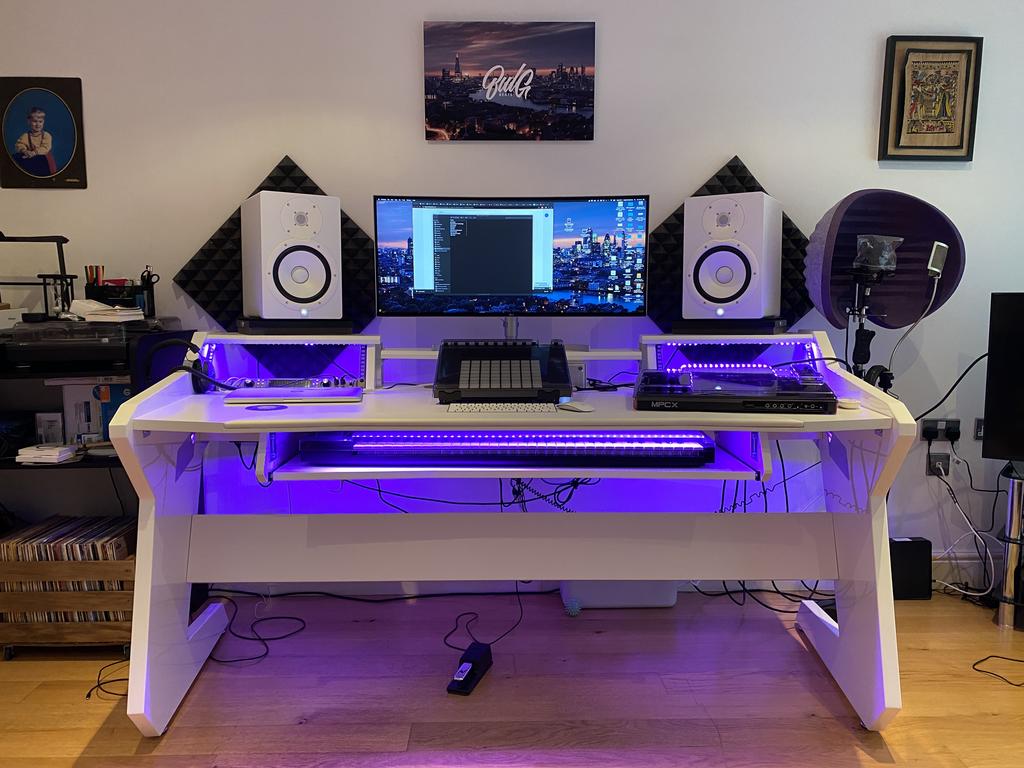
2. Essential Equipment (Entry-Level Studio)
https://www.studiodesk.net/cdn/shop/articles/Commander-V26_ce2371c6-bb76-4d82-80bb-465fd6afa52d.jpg?v=1741354507
https://m.media-amazon.com/images/I/81znfmbTaeL._AC_UF894%2C1000_QL80_.jpg
 
EquipmentFunction
ComputerRuns production software
DAW (Digital Audio Workstation)Main production environment
Audio InterfaceConverts analog ↔ digital audio
Studio Monitors / HeadphonesAccurate sound reproduction
MicrophoneCaptures vocals/instruments
MIDI KeyboardControls virtual instruments

Skill development has higher ROI than expensive gear.

3. The DAW Environment

A DAW (Logic Pro, FL Studio, Ableton Live, Cubase, etc.) contains:

ComponentTechnical Role
TracksSeparate audio/MIDI channels
TimelineLinear song structure
MixerGain staging, panning, effects
PluginsInstruments (VSTi) & processors (FX)
AutomationTime-based parameter control
4. Fundamental Musical Building Blocks
https://m.media-amazon.com/images/I/61P9eKk9uRL._AC_UF350%2C350_QL80_.jpg
https://i1.pickpik.com/photos/667/720/943/bass-guitar-instrument-e-bass-1e2e33ee87489c3662b6ebfe00433ee7.jpg
 

Every production uses these elements:

ElementFrequency RolePurpose
DrumsLow–HighGroove & rhythm
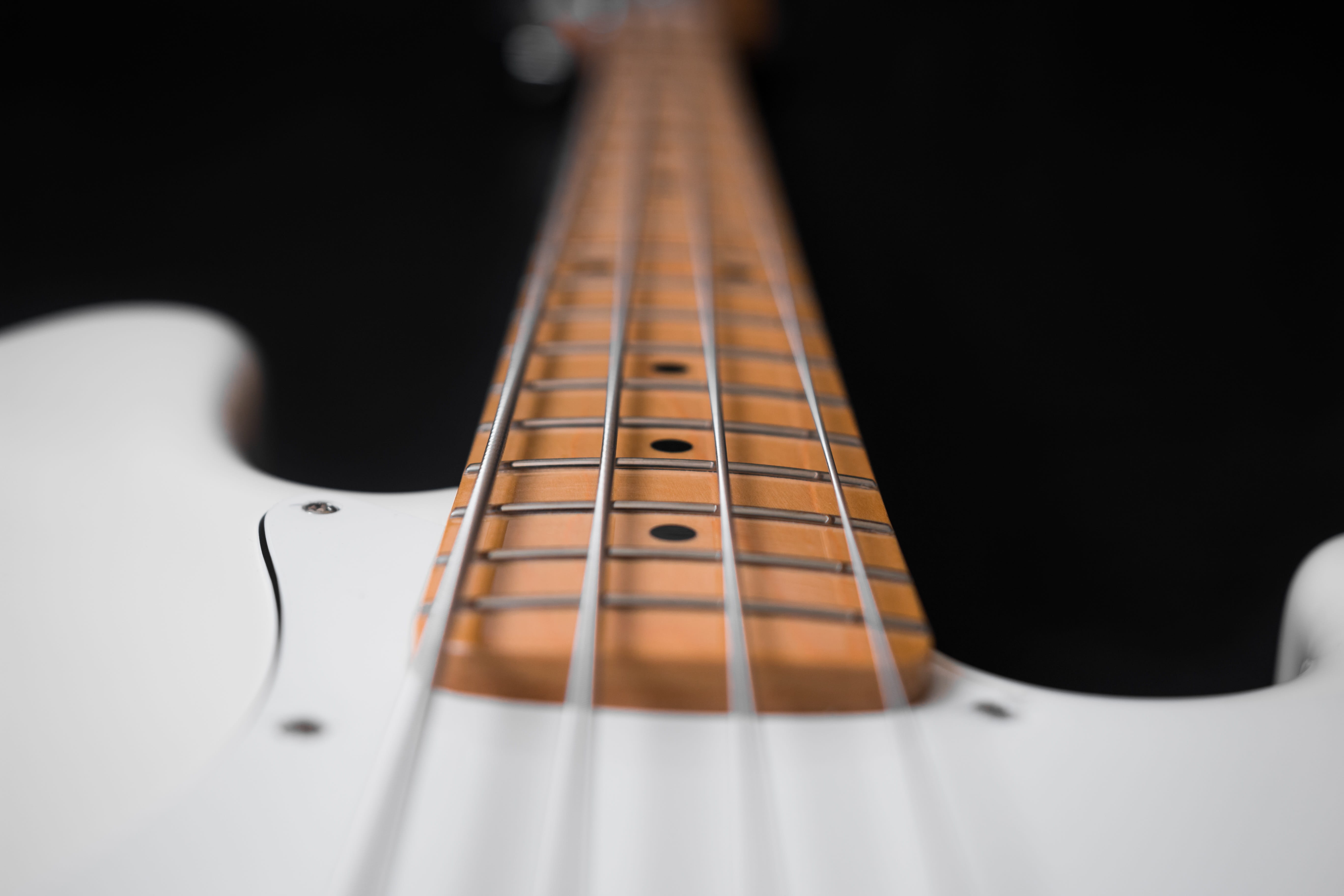
BassLowFoundation & weight
HarmonyMidChord structure
MelodyMid–HighLead focus
FXFull spectrumTransitions & atmosphere
5. Rhythm & Tempo (Groove Fundamentals)
  • BPM (Beats Per Minute) defines speed

  • Most modern music: 90–140 BPM

  • Standard time signature: 4/4

Basic drum grid:

  • Kick → Beats 1 & 3

  • Snare → Beats 2 & 4

  • Hi-hats → Subdivisions (1/8 or 1/16)

6. Chords & Harmony Basics

Start with the key of C Major (no sharps/flats):

C – D – E – F – G – A – B

Common beginner progression:
C – G – Am – F

Chord types:

  • Major = happy/bright

  • Minor = emotional/dark

7. Basslines

Bass follows chord root notes.
If chords = C – G – Am – F
Bass = C → G → A → F

Maintain rhythmic interaction with kick drum.

8. Melody Writing

A melody should:

  • Use notes from the scale

  • Have repetition + variation

  • Leave space (don’t overcrowd)

Think of melody as the vocal line of the instruments.

9. Arrangement Structure

A full song typically follows:

SectionFunction
IntroSets mood
VerseStory develops
Pre-ChorusBuilds tension
ChorusMain hook
BridgeContrast
OutroConclusion
10. Sound Design Basics

Synthesizers use waveforms:

WaveSound Character
SineSmooth
SquareHollow
SawBright/Rich
TriangleSoft

Filters remove frequencies:

  • Low-pass = removes highs

  • High-pass = removes lows

11. Recording Fundamentals
  • Record in quiet space

  • Maintain proper gain (avoid clipping)

  • Use pop filter for vocals

  • Record multiple takes

12. Mixing Basics

Mixing = balancing frequencies, dynamics, and space.

Main tools:

ToolPurpose
EQRemove frequency conflicts
CompressionControl dynamics
ReverbCreate space
DelayAdd depth
PanningStereo placement

Golden rule: Kick, snare, bass, vocal = center.

13. Mastering Overview

Mastering ensures:

  • Competitive loudness

  • Tonal balance

  • Consistency across playback systems

Chain example:
EQ → Compressor → Limiter

14. Critical Listening Training

Daily exercise:

  • Identify instruments

  • Notice stereo width

  • Observe dynamics (loud vs soft)

  • Study transitions

15. Your First Practical Project

Create an 8-bar loop:

  1. Drum groove

  2. Chord progression (C–G–Am–F)

  3. Bassline

  4. Simple melody

  5. Basic EQ & reverb

Export and test on multiple devices.

Course Outcome

After completing this guide, you understand:

  • Studio workflow

  • Song structure

  • Rhythm, harmony, melody

  • Recording & mixing fundamentals

  • How to build a full loop

0 0 votes
Article Rating
Subscribe
Notify of
guest
0 Comments
Oldest
Newest Most Voted
Inline Feedbacks
View all comments
Scroll to Top
0
Would love your thoughts, please comment.x
()
x