
Active vs Passive Bass Guitars: A Complete Guide
Introduction
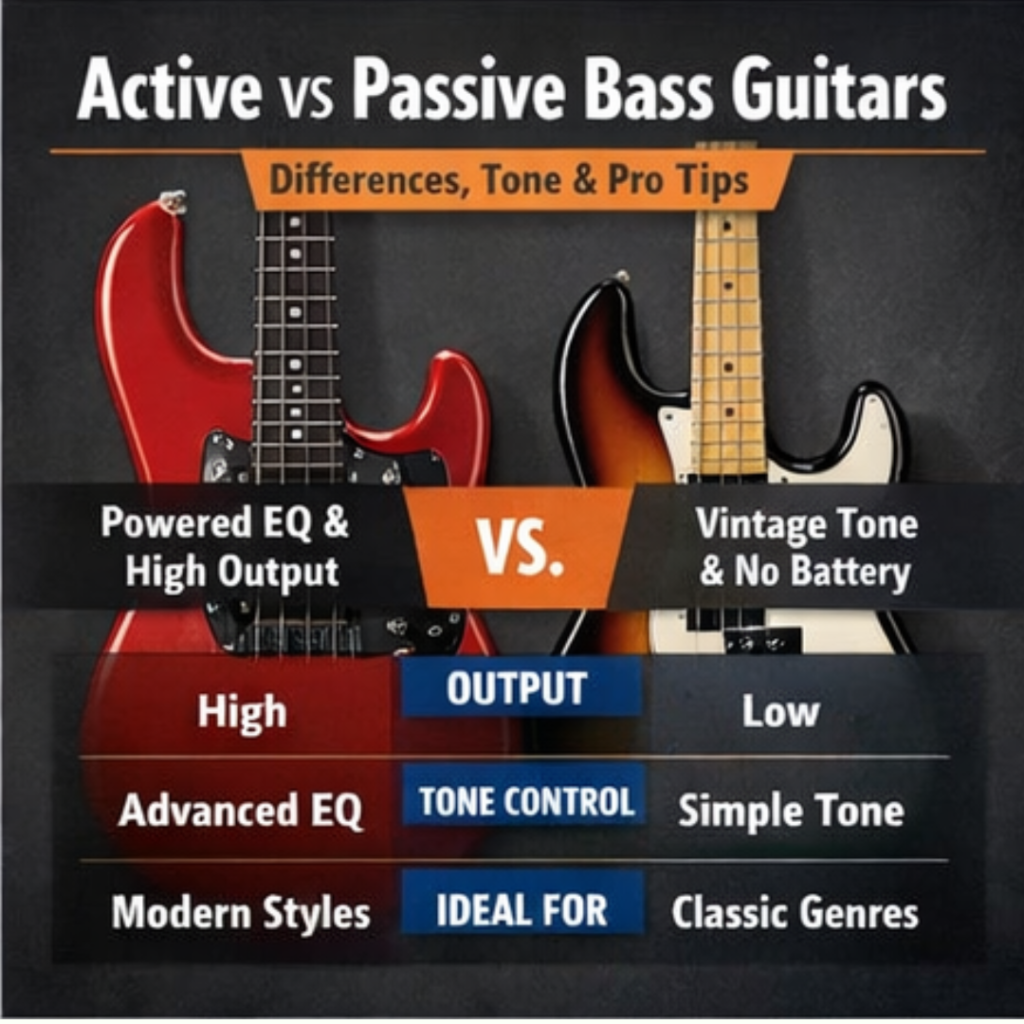
The bass guitar is the backbone of rhythm and harmony in modern music. One of the most important technical distinctions in bass guitars is whether they use active or passive electronics. This difference directly affects tone, output level, flexibility, and suitability for specific musical styles and performance environments.
Understanding this distinction is essential for bassists working in studio recording, live performance, or genre-specific production such as funk, jazz, rock, metal, pop, and fusion.
What Is a Passive Bass Guitar?
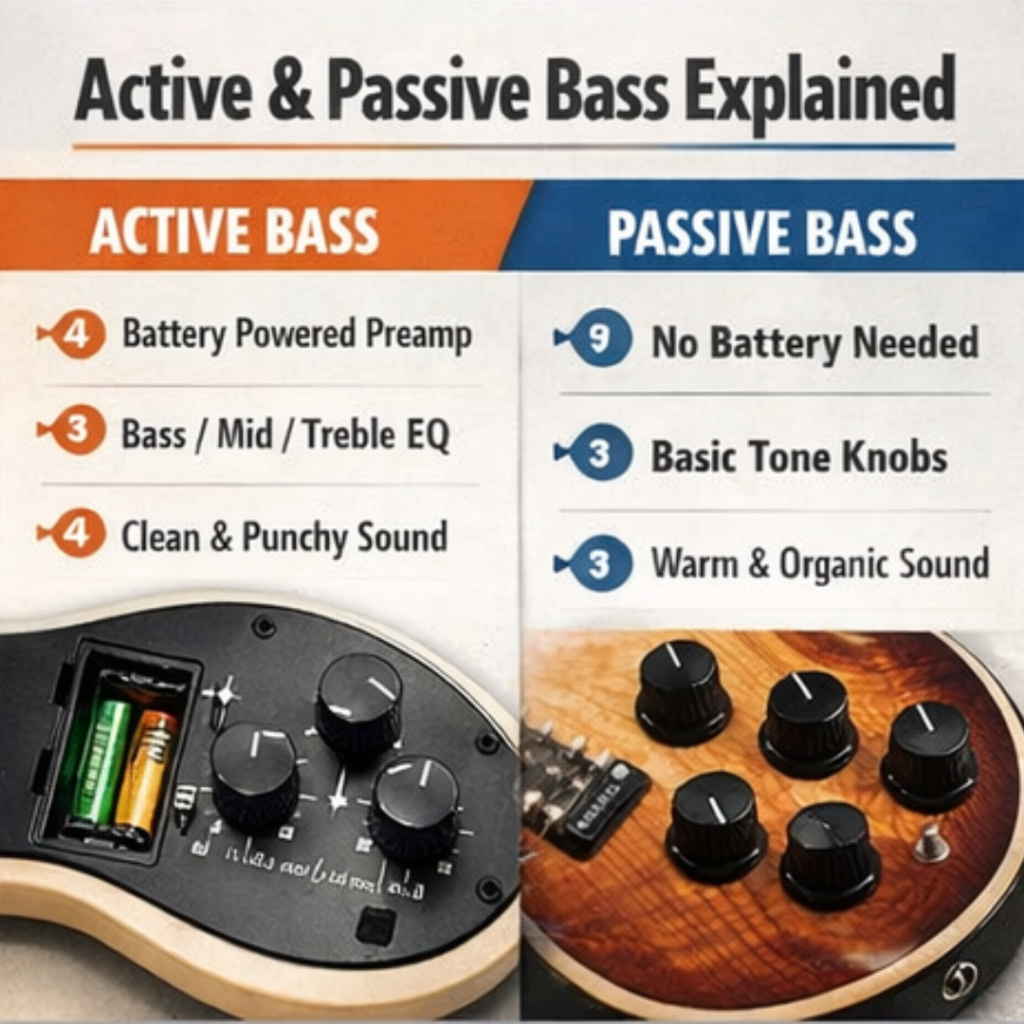
A passive bass guitar uses traditional electronics with no onboard power source. The signal flows directly from the pickups to the volume and tone controls, then to the amplifier.
Key Characteristics
No battery required
Simple signal path
Pure, organic tone
Dynamic response to playing style
Sound Profile
Passive basses produce a warm, natural, and vintage-oriented tone. The sound reacts strongly to finger dynamics, making it expressive and touch-sensitive.
Advantages
Reliable (no battery failure)
Classic tone favored in rock, blues, jazz, and Motown
Lower electronic noise
Easier maintenance and repair
Limitations
Limited tonal shaping from the instrument itself
Lower output signal
Less flexibility for modern or aggressive tones
Best For
Traditional genres (rock, blues, jazz, soul)
Studio recording where natural tone is preferred
Players who rely on amplifier tone shaping
What Is an Active Bass Guitar?
An active bass guitar includes an onboard preamplifier powered by a battery (usually 9V or 18V). This preamp boosts the signal and allows advanced tone shaping directly from the instrument.
Key Characteristics
Requires battery power
Built-in EQ (bass, mid, treble)
Higher output signal
Modern, punchy sound
Sound Profile
Active basses deliver a clean, powerful, and highly defined tone with strong low-end clarity and crisp highs. They excel in cutting through dense mixes.
Advantages
Extensive tonal control on the instrument
Strong output ideal for live performance
Excellent note clarity and articulation
Works well with effects and long cable runs
Limitations
Battery dependency
Slightly more complex electronics
Can sound less “organic” to vintage purists
Best For
Modern genres (funk, metal, pop, gospel, fusion)
Live performance environments
Studio sessions requiring tonal versatility
Active vs Passive Bass: Quick Comparison
| Feature | Passive Bass | Active Bass |
|---|---|---|
| Power Source | None | Battery |
| Output Level | Lower | Higher |
| Tone Control | Limited | Advanced EQ |
| Sound Character | Warm, vintage | Clean, modern |
| Maintenance | Minimal | Battery management |
| Live Performance | Good | Excellent |
| Studio Use | Excellent | Excellent |
Hybrid Option: Active/Passive Switch
Many high-end bass guitars offer active/passive switching, allowing players to use both modes in a single instrument. This is ideal for session musicians and touring professionals.
High-Level Bass Guitar Recommendations
Below are professional-grade bass guitars used by touring artists and studio musicians worldwide.

1. Fender American Professional II Jazz Bass (Passive)
Electronics: Passive
Pickups: V-Mod II single-coil
Tone: Warm, punchy, classic Jazz Bass character
Why It’s High-End
Industry-standard studio bass
Exceptional build quality
Perfect for recording and live use
Best For: Rock, jazz, pop, blues
2. Music Man StingRay Special (Active)
Electronics: 18V active preamp
Pickups: Neodymium humbucker
Tone: Aggressive lows, crisp highs, tight mids
Why It’s High-End
Iconic slap and funk bass tone
Powerful onboard EQ
Extremely consistent output
Best For: Funk, pop, rock, live performance
3. Yamaha TRB 1005J (Active)
Electronics: Active 3-band EQ
Pickups: Humbuckers
Tone: Clean, balanced, modern
Why It’s High-End
Studio-friendly clarity
Excellent note separation
Ergonomic neck design
Best For: Fusion, session work, progressive music
4. Ibanez SR Premium Series (Active)
Electronics: Active 3-band EQ with mid-frequency switch
Pickups: Nordstrand / Bartolini (model dependent)
Tone: Modern, articulate, lightweight feel
Why It’s High-End
Fast neck for technical players
Wide tonal range
Excellent value in premium category
Best For: Metal, fusion, modern pop
5. Warwick Thumb Bass (Active)
Electronics: Active MEC pickups
Tone: Deep growl, aggressive midrange
Why It’s High-End
Signature Warwick growl
Dense woods for powerful sustain
Favored by professional touring bassists
Best For: Rock, metal, progressive styles
Final Recommendation
Choose passive bass if you value classic tone, simplicity, and studio warmth.
Choose active bass if you need power, versatility, and modern tonal control.
Choose active/passive hybrid if you want maximum flexibility in professional environments.