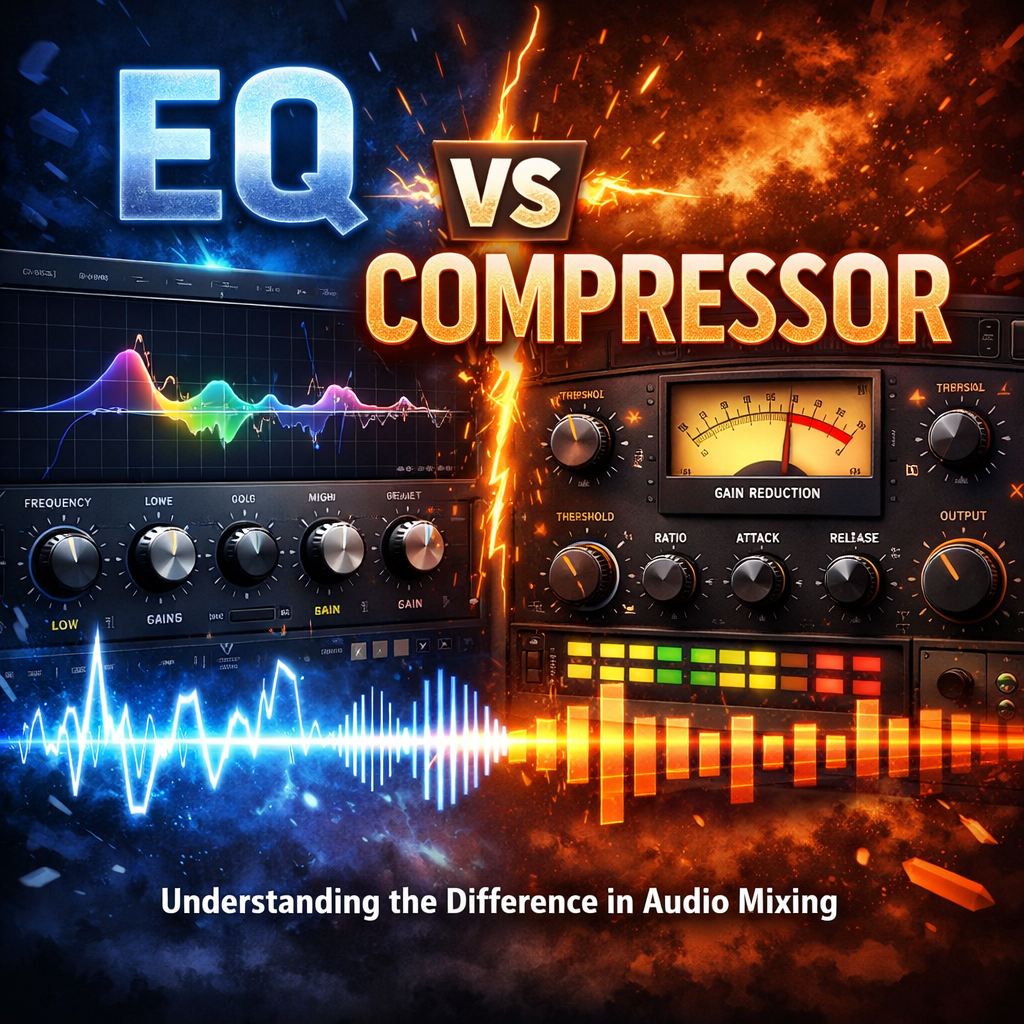
EQ vs Compressor: Understanding the Core Difference in Audio Mixing

EQ vs Compressor: Understanding the Core Difference in Audio Mixing

In music production and audio engineering, EQ (Equalization) and Compression are two of the most powerful signal-processing tools. Beginners often confuse them because both shape sound — but they work on completely different dimensions of audio.

1. What is EQ (Equalization)?
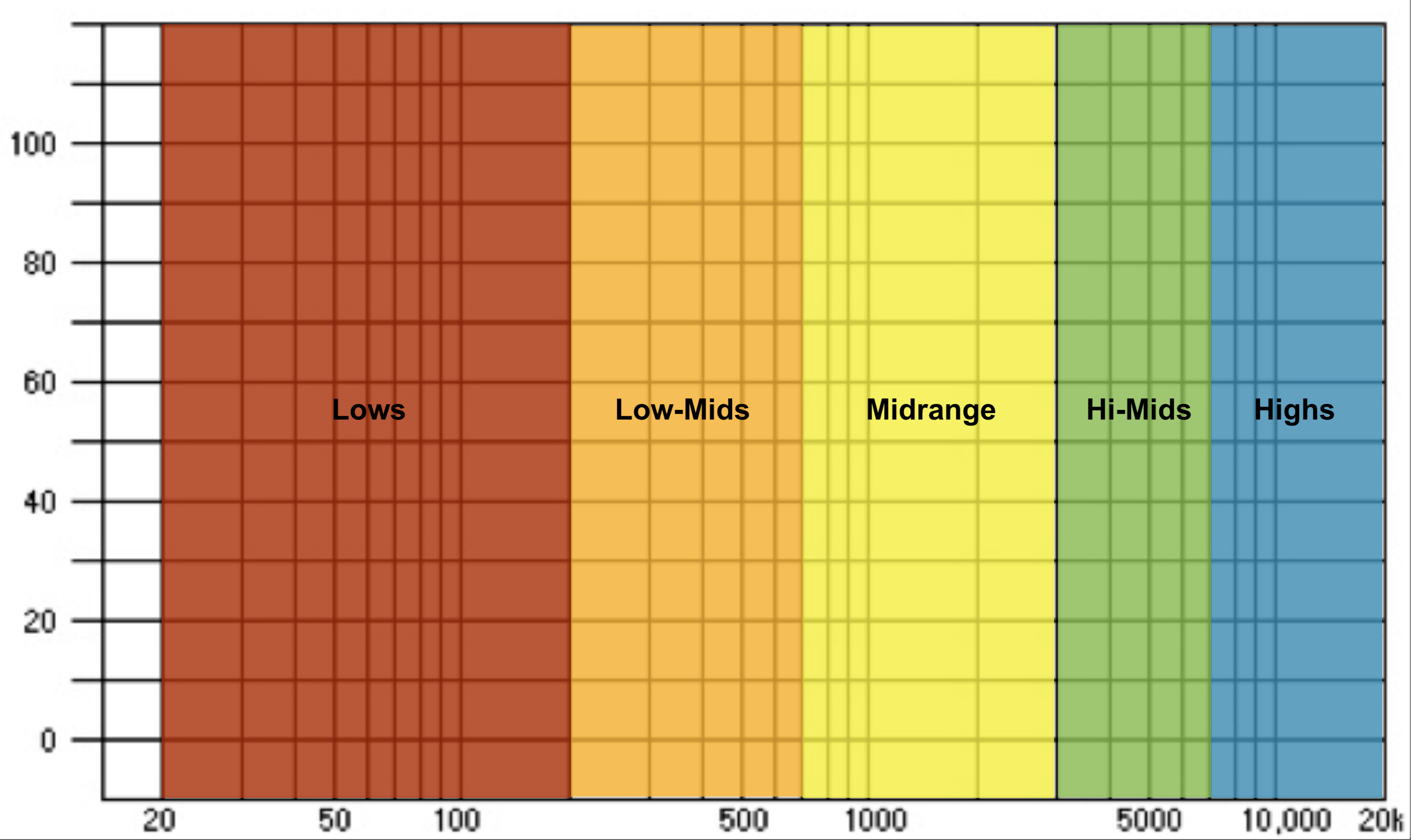
Mixing Essentials: The Highs & Lows of EQ

EQ is a frequency-based processor.
It allows you to boost or cut specific frequency ranges within a sound.

Every sound is made of frequencies (Hz). EQ lets you sculpt the tonal balance.


Main Purpose of EQ
  • Remove unwanted frequencies

  • Enhance clarity

  • Make instruments fit together in a mix

  • Shape tone (bright, warm, thin, heavy)

Common EQ Bands
Frequency RangeWhat It Affects
20–60 HzSub-bass / rumble
60–200 HzBass / punch
200–500 HzMud / boxiness
500 Hz–2 kHzBody of instruments
2–5 kHzPresence / clarity
5–10 kHzBrightness
10–20 kHzAir / sparkle
Example Uses
  • Cutting 200–400 Hz on vocals → removes muddiness

  • Boosting 8–12 kHz → adds air

  • High-pass filter on guitars → clears low-end clutter

Key Point:
EQ changes WHAT frequencies you hear.

2. What is a Compressor?
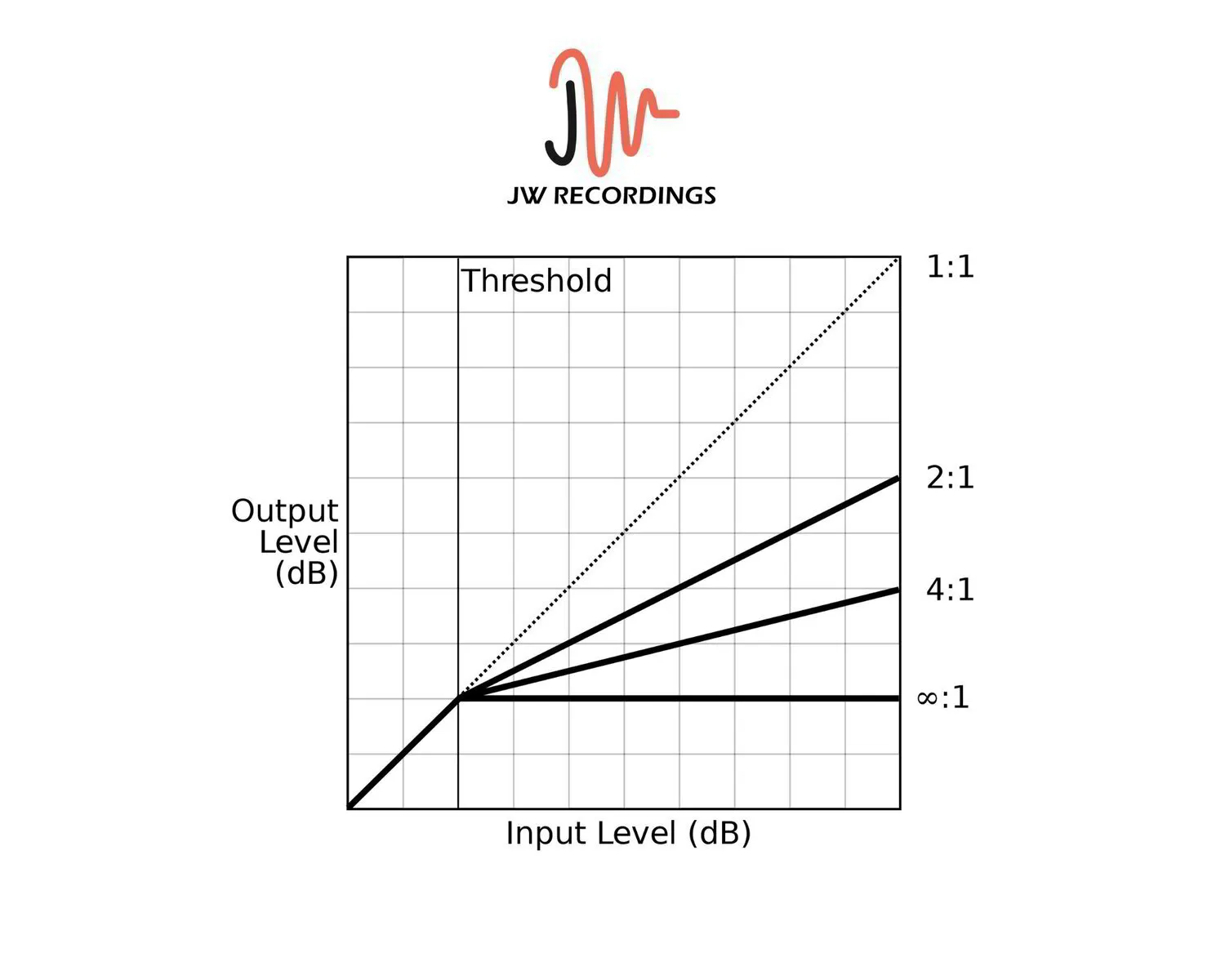
Audio Compressor Ratio Explained

A compressor is a dynamics processor.
It reduces the difference between loud and quiet parts of a sound.

Instead of frequency, it reacts to volume level.


Main Purpose of Compression
  • Control peaks

  • Make sound more consistent

  • Add punch or sustain

  • Glue tracks together

Main Compressor Controls
ControlFunction
ThresholdLevel where compression starts
RatioHow much gain reduction happens
AttackHow fast compression kicks in
ReleaseHow fast it stops
Makeup GainRaises overall level after compression
Example Uses
  • Compress vocals → more even performance

  • Compress drums → punchier hits

  • Bus compression → “glue” mix together

Key Point:
Compression changes HOW LOUD parts of the sound are over time.

3. EQ vs Compressor — Side-by-Side Comparison
FeatureEQCompressor
Works OnFrequencyVolume (Dynamics)
AffectsToneLoudness consistency
Main GoalShape sound colorControl peaks & dynamics
Removes Mud?YesNo
Controls Volume Spikes?NoYes
Adds Brightness?YesNo
Makes Sound Tighter?SometimesYes
Used ForTonal balanceDynamic control
4. How They Work Together

Professional mixes always use both.

Example: Vocal Processing Chain

  1. EQ first → remove mud (300 Hz), reduce harshness (4 kHz)

  2. Compressor → control loud/soft parts

  3. EQ again → add air (10 kHz)

EQ shapes the tone. Compression controls the performance.

5. Simple Analogy
  • EQ = Color correction in photography

  • Compressor = Exposure control

One shapes color, the other controls brightness levels.

6. When to Use Which?
ProblemUse
Vocal sounds muddyEQ
Vocal volume jumpingCompressor
Guitar harshEQ
Drums too spikyCompressor
Mix lacks clarityEQ
Mix lacks punchCompressor
ToolControlsThink Of It As
EQFrequenciesTone shaper
CompressorDynamicsVolume controller

EQ fixes the sound.
Compression fixes the performance.


Both are essential — and mastering their difference is the first step to professional-sounding mixes.

0 0 votes
Article Rating
Subscribe
Notify of
guest
0 Comments
Oldest
Newest Most Voted
Inline Feedbacks
View all comments
Scroll to Top
0
Would love your thoughts, please comment.x
()
x